

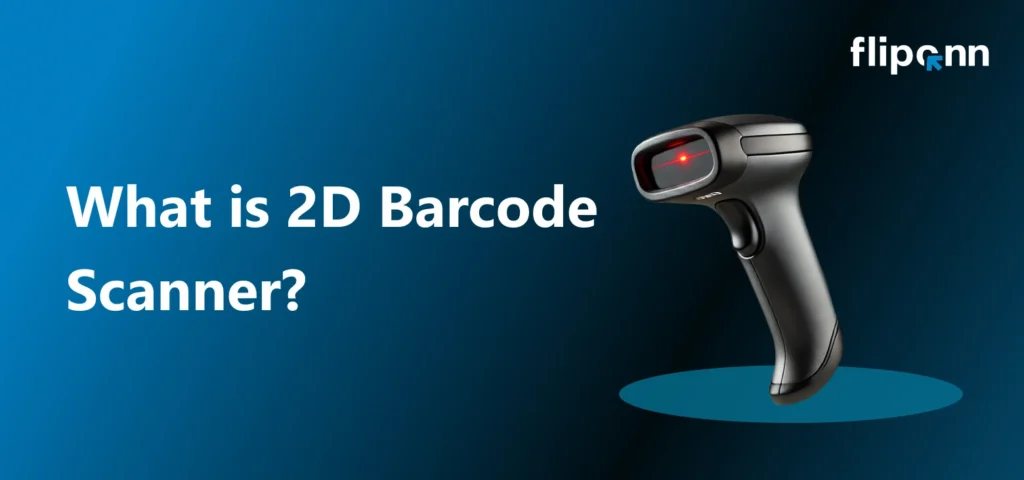
2D barcode scanners are imaging devices that decode two-dimensional codes like QR codes and Data Matrix, by capturing data both horizontally and vertically, allowing them to store far more information than traditional 1D barcodes. They convey critical information across diverse sectors such as retail, inventory management, and healthcare. With technological advancements, barcode systems have evolved, and 2D barcode scanners have taken center stage.
Unlike traditional 1D barcode scanners, which read barcodes in a single direction, 2D barcode scanners can capture data horizontally and vertically. This capability offers higher data capacity and versatility, making them essential in industries ranging from retail to logistics.
This blog explores what is 2D barcode scanners, covering their features, types, and benefits to help you determine how they can benefit your business.
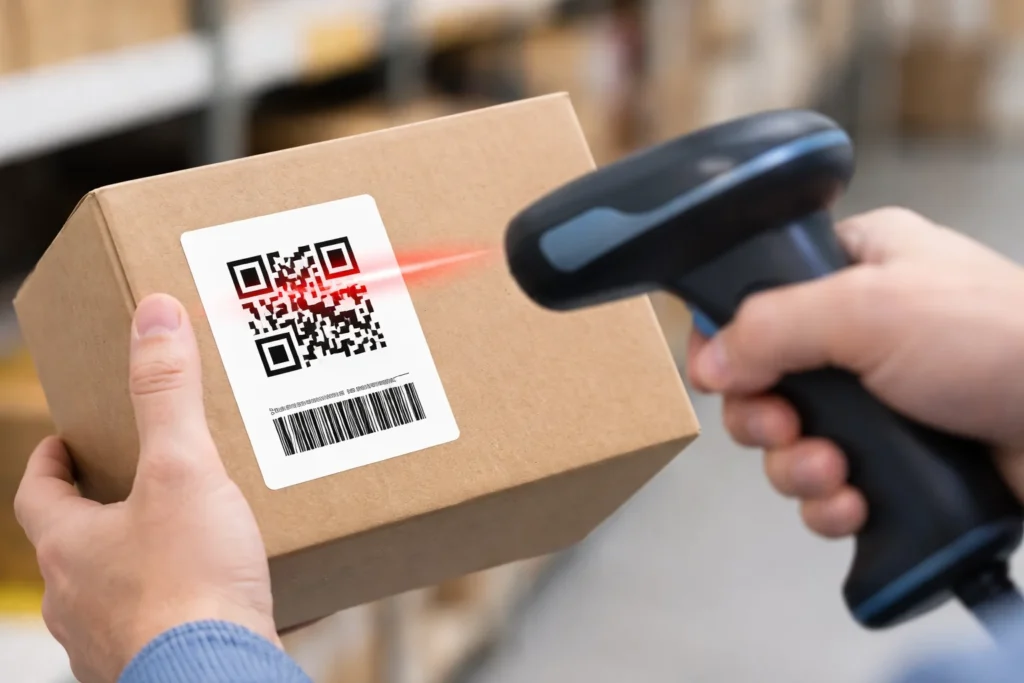
What is a 2D Barcode Scanner?
A 2D barcode scanner is a device used to read two-dimensional barcodes. Unlike traditional 1D barcode scanners, which read barcodes only in one direction (left to right), 2D barcode scanners can capture information both horizontally and vertically. This ability allows them to scan barcodes with much greater data capacity.
A 2D barcode can store up to 7,089 characters of data, compared to the limited 1D barcodes that typically hold just 20-25 characters. This makes 2D barcode scanners ideal for environments that require large amounts of data to be accessed quickly and easily, such as healthcare, logistics, and inventory management.
Android and iOS smartphones are equipped with built-in barcode scanners that utilize 2D barcodes. Users can capture an image of a 2D barcode using their smartphone camera, after which the integrated reader decodes the embedded URL, directing the user straight to the associated website.
Key Features of 2D Barcode Scanners:
- Enhanced Data Capacity: Stores up to 7,089 characters far beyond what 1D barcodes can hold, supporting a vast range of data-intensive applications.
- Screen Reading Capability: 2D scanners can decode QR codes and barcodes displayed directly on smartphones, tablets, and monitors. Laser-based 1D scanners cannot do this at all, making 2D scanners essential for e-wallets, digital coupons, e-tickets, and mobile loyalty programmes.
- Smartphone Compatibility: Enables scanning via mobile apps, expanding usability for both personal and professional purposes.
- Efficient Performance: Reads barcodes even if they are damaged, low quality, or printed at a low resolution.
- Omni-Directional Scanning: Reads barcodes from virtually any angle. no need to align the scanner perfectly with the code.
While 1D barcode scanners are ideal for simple applications like retail checkouts, 2D barcode scanners excel in environments requiring larger data storage, such as healthcare for patient records or logistics for tracking shipments.
Difference Between 1D and 2D Barcode Scanners
| Feature | 1D Barcode Scanner | 2D Barcode Scanner |
|---|---|---|
| Appearance | Linear barcodes with lines and spaces | Square or rectangular codes like QR codes |
| Data Capacity | Stores up to 20-25 characters | Stores up to 7,089 characters |
| Scanning Technology | Uses lasers to detect patterns | Uses cameras or imaging sensors |
| Direction | Scans left to right only | Scans both horizontally and vertically |
| Use Cases | Retail environments for basic product information | Healthcare, logistics, marketing, and data-intensive industries |
| Resilience | Struggles with damaged or low-quality barcodes | Can read damaged or low-contrast barcodes |
While 1D barcode scanners are ideal for simple applications like retail checkouts, 2D barcode scanners excel in environments requiring larger data storage, such as healthcare for patient records or logistics for tracking shipments.
Learn more about the differences between 1D and 2D barcode scanners.
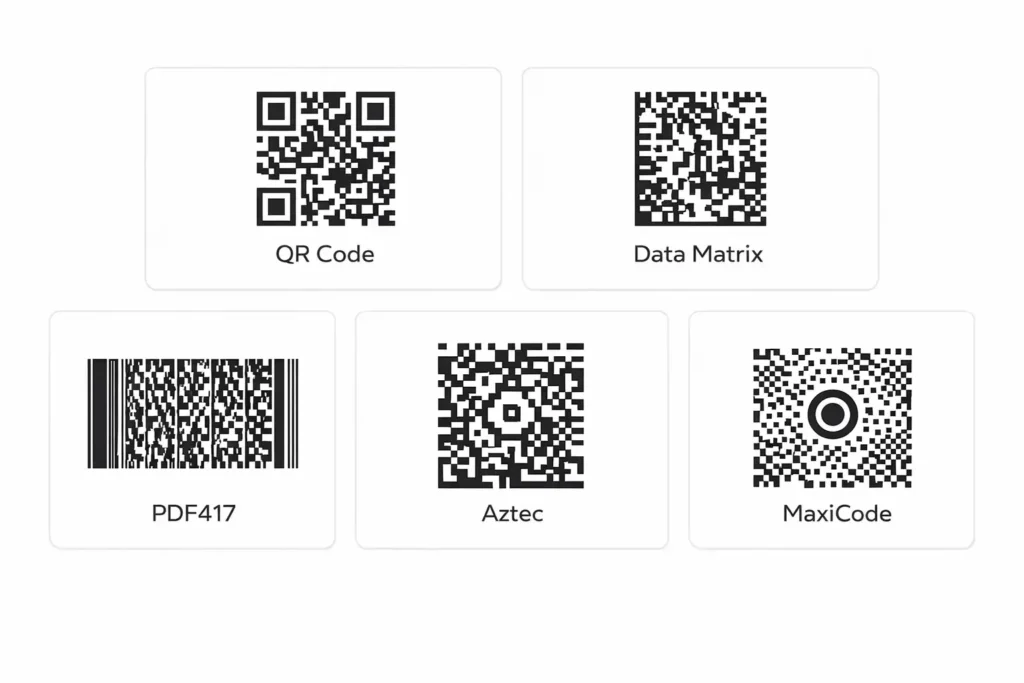
Types of 2D Barcodes
Not all 2D barcodes are the same. Each format is designed for specific data requirements and industry applications. Here are the five most widely used types:
1. QR Code (Quick Response Code) The most recognisable 2D barcode format. QR codes store URLs, contact details, payment data, and more. Widely used in retail marketing, restaurant menus, digital payments (like Google Pay and Apple Pay), and product packaging. Smartphones can read QR codes natively without a separate scanner app.
2. Data Matrix A compact, square barcode capable of storing up to 2,000 characters in a very small space. Even if up to 60% of the barcode is damaged, it remains readable thanks to built-in Reed-Solomon error correction. Commonly used in electronics manufacturing, automotive parts, pharmaceutical labelling, and aerospace component tracking.
3. PDF417 A high-capacity 2D barcode that can store text, numbers, and even binary data like fingerprints and signatures. The name stands for Portable Data File — each pattern contains 17 units of data across 4 bars. Used extensively on driving licences, boarding passes, identity documents, and government-issued cards.
4. Aztec Code A compact, square barcode that is more space-efficient and resilient than QR codes, as it does not require a quiet zone (blank border) around it. Commonly found on boarding passes, railway and bus tickets, and government identity documents.
5. MaxiCode Developed by UPS specifically for high-speed package sorting, MaxiCode consists of a fixed-size pattern of hexagons around a circular bullseye centre. It is designed to be scanned at high speed on conveyor belts and is used almost exclusively in courier and logistics operations worldwide.
Benefits of 2D Barcode Scanners
There are numerous benefits to using 2D barcode scanners:
- Increased Data Capacity: 2D barcodes can hold far more information than 1D barcodes, allowing businesses to store detailed data about products, customers, or processes.
- Improved Efficiency: 2D barcode scanners can process information faster and more accurately, reducing human error and improving overall workflow efficiency.
- Versatility: They can be used in various environments, both online and offline, making them suitable for a range of industries from retail to healthcare.
- Resilience: 2D barcode scanners are capable of reading damaged or low-quality barcodes, which is a significant advantage in environments where barcodes might degrade over time.
How Do 2D Barcode Scanners Work?
The scanning process of a 2D barcode scanner involves three critical steps:
Step 1: Image Capture The scanner uses a built-in CMOS or CCD imaging sensor. essentially a tiny digital camera to capture a precise image of the barcode. Unlike laser-based 1D scanners, this sensor captures the entire code in one snapshot, regardless of orientation or angle.
Step 2: Data Decoding & Error Checking Sophisticated onboard software analyzes the captured image, identifying the pattern of light and dark modules the squares, dots, or lines and translates them into digital data. The software also performs automatic error checking, verifying the decoded data against built-in redundancy patterns to ensure accuracy even if the barcode is partially damaged or smudged.
Step 3: Data Transfer The verified data is instantly transmitted to a connected system via USB, Bluetooth, or serial connection such as a POS terminal, inventory management software, or ERP system.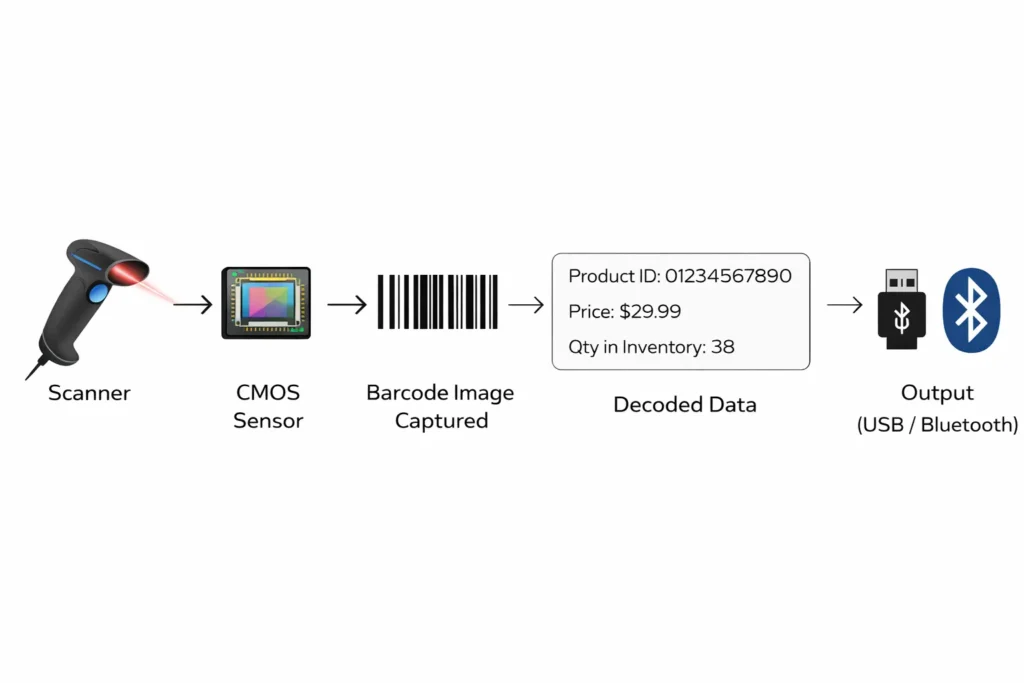
Best 2D Barcode Scanners in 2026
When selecting a 2D barcode scanner, it’s important to consider features such as durability, scanning speed, connectivity, and brand reliability. Here are some of the best models to consider in 2025:
- Honeywell 2D Barcode Scanner: Known for reliability and accuracy, Honeywell scanners are a favorite in healthcare and retail applications. They are available in both handheld and wireless models.
- Zebra 2D Barcode Scanner: Zebra’s scanners are designed for heavy-duty use in warehouses and logistics. Their robust design and wireless functionality make them a top choice for businesses with demanding scanning needs.
- Symbol 2D Barcode Scanner: Symbol (now part of Zebra Technologies) has been a leader in barcode scanning technology for years. Their scanners offer high performance and are particularly popular in retail environments.
Applications of 2D Barcode Scanners
2D barcode scanners are employed across various industries:
- Retail: In retail, 2D barcode scanners are used for inventory management and speeding up checkout processes. They can quickly read barcodes from products or shelf labels and are essential in ensuring stock levels are accurate.
- Healthcare: In hospitals and clinics, 2D barcode scanners help access patient records, track medications, and ensure patient safety. Scanning barcodes on wristbands or medication bottles helps improve accuracy and reduce errors.
- Logistics: 2D barcode scanners enhance supply chain management by allowing quick scanning of packages and inventory. This ensures accurate tracking of goods and streamlines the movement of products across warehouses and distribution centers.
- Marketing: QR codes, a type of 2D barcode, are commonly used in marketing. They link to promotional content, websites, or special offers, allowing consumers to easily access information with their smartphones.
Conclusion
2D barcode scanners revolutionize how businesses handle data, offering superior capacity, efficiency, and versatility. Whether you need to streamline inventory management, enhance patient safety, or improve checkout experiences, these devices are indispensable in modern workflows.
As you explore the best options for your needs, it’s important to consider factors like scanning speed, connectivity, and durability. The Best 2D barcode scanner can improve workflow, reduce errors, and simplify processes.
FAQ
Can a 2D barcode scanner also read 1D barcodes?
Yes, most modern 2D barcode scanners are backward compatible, meaning they can read both 1D and 2D barcodes. This makes them a smart long-term investment, as businesses don’t need to maintain two separate scanning devices. A single 2D scanner can handle everything from simple retail product barcodes to complex QR codes.
Can smartphones replace dedicated 2D barcode scanners?
Smartphones with built-in cameras can scan basic 2D barcodes like QR codes for personal or casual use. However, for business environments that require high-speed, high-volume, or highly accurate scanning, dedicated 2D barcode scanners are far more reliable. They offer faster read speeds, better performance under poor lighting or with damaged barcodes, and seamless integration with business software systems.
What should I look for when choosing a 2D barcode scanner?
Key factors to consider include scanning speed (important in high-volume environments), connectivity options (USB, Bluetooth, or Wi-Fi depending on your setup), durability (especially for warehouse or outdoor use), compatibility with your existing software systems, and brand reliability. Top brands like Honeywell, Zebra, and Symbol are widely trusted for their performance and long-term support.
Are 2D barcode scanners difficult to set up and use?
Not at all. Most 2D barcode scanners are plug-and-play devices, especially wired USB models, which require minimal configuration. Wireless models may need a brief pairing process via Bluetooth or Wi-Fi. Once connected, they integrate easily with POS systems, inventory software, or other business tools, making them accessible even for non-technical users.
Can 2D barcode scanners read barcodes from screens?
Yes, many modern 2D barcode scanners can read barcodes displayed on digital screens such as smartphones, tablets, or computer monitors. This is particularly useful for mobile ticketing, digital coupons, loyalty programs, and contactless payment systems where customers present a barcode on their phone rather than a printed label.