

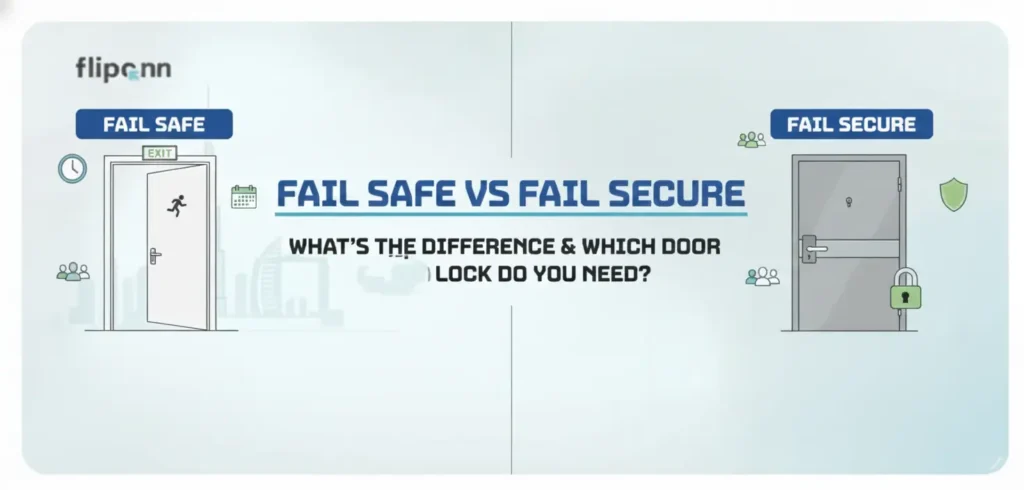
When securing your business premises in Dubai and across the UAE, choosing the right electronic lock system isn’t just about keeping unauthorized people out—it’s about balancing security with safety. The decision between fail safe and fail secure locks can literally mean the difference between protecting your assets and protecting lives during emergencies.
Understanding these two fundamental lock types is crucial for anyone implementing door access control systems. Let’s break down everything you need to know to make the right choice for your facility.
What Is a Fail Safe Lock?
A fail safe lock is designed with one priority: keeping people safe. The fail safe lock meaning centers on its behavior during power loss—these locks automatically unlock when electricity is cut off.
Here’s how it works: fail safe locks require continuous electrical power to stay locked. When you present a valid credential like a keycard or fob, it briefly interrupts the power supply, allowing the door to open. But if there’s a complete power failure, the door unlocks entirely.
This might sound counterintuitive for “security,” but the logic is simple: in emergencies like fires or natural disasters, people need to escape quickly. Magnetic lock fail safe systems are particularly common for this purpose, especially on glass doors and emergency exits where life safety is paramount.
Common Applications for Fail Safe Locks:
- Main building entrances and lobbies
- Emergency exit doors
- Stairwell access points
- Office doors with high daily traffic
- Areas where emergency responder access is critical
The major advantage? During door access control power failure, occupants can exit freely, and first responders can enter without delay. The trade-off is that during power outages, security is compromised—anyone can walk in.
What Is a Fail Secure Lock?
Fail secure locks operate on the opposite principle. These locks need electrical power to unlock, meaning they remain locked when power is lost. This design prioritizes protecting assets over providing unrestricted access.
When power flows to a fail secure electric strike, the mechanism releases to allow entry. Cut the power, and the lock automatically engages, keeping the door secured from the outside. However, most fail secure systems include mechanical overrides—typically keys for authorized personnel—ensuring emergency egress is always possible from inside.
Ideal Locations for Fail Secure Locks:
- Server rooms and data centers
- Storage areas containing valuable equipment
- Pharmaceutical storage facilities
- IT departments
- File rooms with sensitive documents
- Unmanned exit doors
These locks provide continuous protection even during electrical failures, making them essential for high-security zones where asset protection cannot be compromised. Many businesses integrate them with comprehensive security solutions including CCTV and biometric systems for enhanced protection.
Fail Safe vs Fail Secure: Key Differences
| Feature | Fail Safe | Fail Secure |
| Power Loss | Unlocks | Stays Locked |
| Priority | Life Safety | Security |
| Typical Use | Emergency exits, maglocks | Data centers, restricted rooms |
| Fire Exit Compliance | Often required | Not allowed on egress doors |
Security vs Safety
- Fail safe = safe for occupants during fire
- Fail secure = secure against intruders during outages
Both systems must still comply with egress requirements—occupants can always exit from inside, regardless of lock type.
Electric Strike Fail Safe vs Fail Secure
One common misconception: many assume electric strike locks are only fail secure. The truth is that electric strikes can be configured either way, depending on the solenoid polarity used in the mechanism.
The solenoid’s magnetic field controls whether the strike releases or holds when powered. By reversing the polarity, installers can set electric strikes to operate in fail safe or fail secure mode, making them highly versatile for different door applications.
For electric strike fire door installations, however, regulations typically mandate fail secure operation to ensure positive latching during fire events, helping contain smoke and flames. Understanding fire safety compliance is crucial for UAE businesses.
What Happens When Access Control Fails?
During power outages, your door access control power failure response depends entirely on your lock configuration:
With Fail Safe Systems:
- Doors unlock immediately
- All occupants can exit freely
- Emergency services gain immediate access
- Security perimeter is temporarily lost
- Backup batteries can maintain locked state if installed
With Fail Secure Systems:
- Doors remain locked from outside
- Interior occupants can still exit (via push bars, crash bars, or interior handles)
- Mechanical key override allows authorized emergency access
- Security perimeter remains intact
- Assets stay protected
Many businesses use backup power supplies for critical access points, but it’s essential to understand that adding batteries to fail safe locks effectively converts them to fail secure operation during outages. Integrating your access control with biometric systems and CCTV surveillance creates multiple layers of security that function even during partial system failures.
Where to Use Fail Safe vs Fail Secure Locks
The decision often depends on the door’s location and function:
Choose Fail Safe for:
- High-traffic entry and exit points
- Locations where emergency responder access is critical
- Emergency egress door locks
- Elevator lobbies
- Parking garage access points
- Areas requiring rapid evacuation capability
Choose Fail Secure for:
- Rooms containing sensitive or valuable assets
- Perimeter doors in low-traffic areas
- Server rooms and network closets
- Hazardous material storage
- Areas with confidential information
- Unmanned exits
For retail environments, warehouses, and office buildings, Fliponn Tech’s security solutions can help design the optimal mix of both lock types tailored to your specific operational needs.
Choosing the Right Lock: Safety Codes & Fire Regulations
Building codes and fire safety regulations heavily influence lock selection. In the UAE, as in most jurisdictions, fire doors must meet specific requirements under civil defense regulations.
Key compliance considerations:
- NFPA 80 standards typically require fail secure electric strikes on fire-rated doors
- Emergency egress must always be maintained from the interior
- NFPA 101 Life Safety Code mandates free egress regardless of lock type
- Local fire marshals and civil defense authorities have final authority on installations
- UAE building codes align with international safety standards
Always consult with local authorities having jurisdiction before finalizing your access control design.
Pros and Cons of Both Lock Types
Fail Safe Advantages:
- Ensures safe emergency evacuation
- Allows first responder access
- Simple emergency operation
- Ideal for public-facing doors
Fail Safe Disadvantages:
- Security compromised during power loss
- Higher ongoing power costs
- More wear on electrical components
- Vulnerable to intentional power disruption
Fail Secure Advantages:
- Maintains security during outages
- Lower power consumption
- Less electrical component wear
- Better for asset protection
Fail Secure Disadvantages:
- Requires key override system
- May slow emergency responder entry
- Needs careful egress planning
- Not suitable for all locations
Conclusion
The fail safe vs fail secure decision isn’t about which lock is “better”—it’s about matching the right technology to each door’s specific requirements. Most facilities benefit from a strategic mix of both lock types, integrated with modern access control technology.
For your door access control implementation in Dubai or anywhere in the UAE, consider working with experienced security solution providers who understand local regulations and can design systems that balance safety, security, and compliance.
At Fliponn Tech, we specialize in comprehensive door access control systems tailored to your facility’s unique needs. Our security solutions integrate seamlessly with biometric systems, CCTV surveillance, and modern access control platforms to create a complete protective ecosystem for businesses across Dubai, Sharjah, Abu Dhabi, and throughout the UAE.
Quick Selection Guide:
- Main entrances: Fail Safe
- Emergency exits: Fail Safe
- Server rooms: Fail Secure
- Executive offices: Fail Safe
- Storage areas: Fail Secure
- Fire doors: Fail Secure (with proper egress hardware)
Ready to upgrade your access control system? Contact Fliponn Tech today for a consultation on implementing the right mix of fail safe and fail secure locks for your Dubai facility.